Karl Lunneborg
Fr. Kind
Paideia II
17 May, 2026
Scholasticism Paper
Scholasticism. To the classically trained scholar, it sounds like quite the noble pursuit. And yet, it is a misnomer in such a person’s circles. Scholasticism is the root of several severe doctrinal errors, errors that separate people from taking Holy Communion together. Scholasticism relies on the human reason over anything, even over the Scriptures. Putting God’s own Word under the authority of man should immediately be recognised as faulty, but this thinking was quite popular in its time.
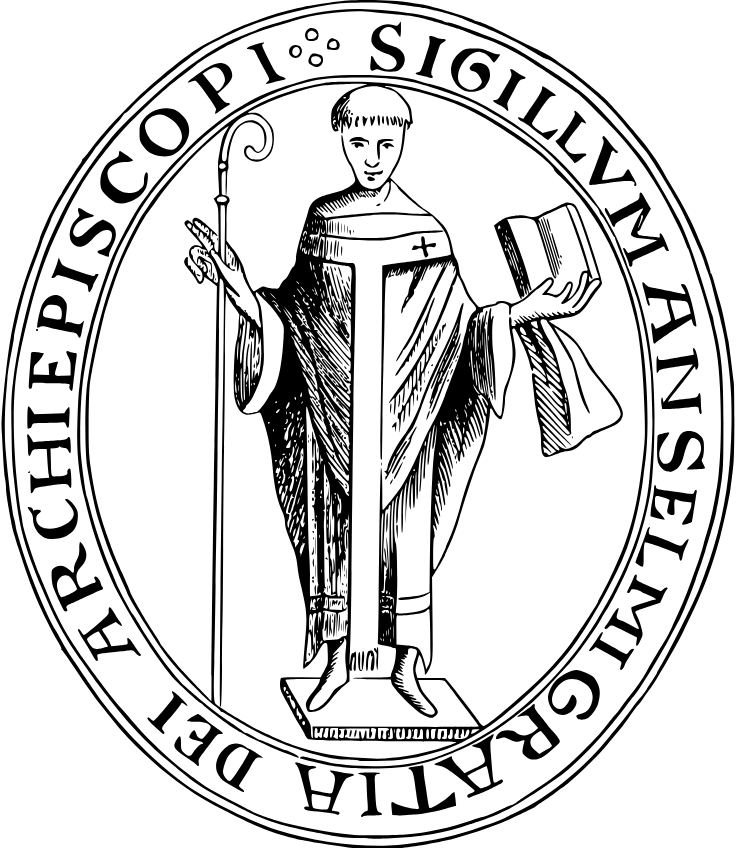
The major problem with mediaeval scholasticism is that it relies entirely on human reason, and tries to fit ‘unreasonable’ things like God into our mortal molds. For example, Anselm of Canterbury put God in his own reasonable-box and tried to make sense of God existing. According to his reason, not only does God exist, but God can’t not exist. In fact, he says “it is possible to conceive of a being which cannot be conceived not to exist” (Anselm, Chap. III). It sounds like he is weaving a net of mental confusion, does it not? What he is saying is that we can think God, which is correct; and we cannot think that God does not exist; which is questionable in the least. He goes on to say that when a being cannot be thought to not exist, it is greater than any beings that can be thought to not exist (Anselm, Chap. III). Confusing, yes. He then uses the reasoning that if a man were to think of a being greater than God, he would be putting the creature over the creator, and that would be an absurd thought and therefore invalid (Anselm, Chap. III). When we look at Anselm’s argument through his mortal viewpoint, his reasoning is absurd, too.
Anselm is indeed weaving quite a net of mental confusion. The amount of effort it takes to make reason of God’s existence is incredible, but not surprising. This last argument, though, is one that doesn’t seem to fit the mortal reasoning standpoint. For example, say a secular man is reading this work. He would get to this point and say to himself that Anselm is using an unproven premise, vis. that no being is greater than God. To a Christian, this point is only natural. But within human reason it remains unproven. So Anslem’s argument is invalid because he uses what would be considered ‘personal opinions’ to validate a point. The entire structure of human reasoning falls apart and crumbles to the ground. You just can’t use fallen, human thought to ‘make God work’ in our minds. To make God make sense. God has not given us all knowledge and understanding. Some things about God are left to be a mystery to us.
Yet the scholastic scholars of this era didn’t accept that. They continued making God, His Holy Scriptures, and all points of Theology fit inside their human reason. This causes problems, of course. One of these is transubstantiation. Transubstantiation is the belief that, in Holy Communion, the bread and wine are transformed into the Body and Blood. This makes sense to the human mind; at least, more sense than the alternative. The alternative is consubstantiation, the belief that the bread and wine are present in, with, and under the Body and Blood. To the human mind, believing that the bread and wine are changed into the Body and Blood makes a lot more sense than the two realities taking up the same physical space in consubstantiation. So the scholastic theologians put God in their reasoning-boxes and came out with the idea that transubstantiation must be the correct theology. To mimic Anselm, we might say that they thought any other belief would be absurd. And why would it be absurd? Because it doesn’t make ‘sense’. But it’s not supposed to make sense, it is a mystery that God left us with, unsolved. This seeping of scholasticism into theology certainly causes problems, as is shown above. And yet, instead of calling out the scholastics for not trusting the Word of God as exactly that, the mediaeval theologians went along with this turning upside down of created order.
From this, we see that the faulty reasoning they used in the mediaeval era still hasn’t been completely reversed. In the modern day, the Roman Catholic church still holds transubstantiation as their official doctrine. While it may make sense to the human mind, it goes against God’s word. John 9:55-56 and 1 Corinthians 11:27-29 give proof that consubstantiation is the correct doctrine. John writes that Jesus’ Flesh is true food and His Blood is true drink. Paul references the same thing as the bread and the cup, or wine, saying that anyone who eats and drinks in an unworthy manner are drinking condemnation on themselves. But because this didn’t make sense to the scholastic theologians, they began teaching the doctrine of transubstantiation. And, of course, this doctrine has not been corrected since. Scholasticism continues to leave marks throughout history and the modern age, separating the Roman Catholics from others in Holy Communion because the beliefs are so very different.
Mediaeval scholasticism, then, is a very unfortunate way of thinking. It tries to put God in boxes of human reasoning, but this only causes problems. People like Anselm tried making sense of God, but his arguments rested on fallen human reasoning and what would be considered personal opinion, leaving them useless. And then we see human reasoning try to put Holy Communion into a box, but that doesn’t work either. Scholasticism upsets the natural order, putting human reason above God’s very own Word, and ends up disrupting all theology.
Works Cited
Anselm of Canterbury. “Proslogium.” Internet History Sourcebooks: Medieval Sourcebook,
sourcebooks.fordham.edu/basis/anselm-proslogium.asp. Accessed 22 May 2026.
The Lutheran Study Bible: English Standard Version. Concordia Publishing House, 2009.
Author Profile

Latest Posts
 EssaysOctober 6, 2026Luther’s Works vs. More’s Utopia
 TravelOctober 6, 2026The Road Goes Ever On and On – Vol. 1, Issue 1
 EssaysJuly 9, 2026Why Choose Classical Education in the Modern Era?
 EssaysMay 22, 2026Mediaeval Scholasticism
Discover more from K. D. Lunneborg
Subscribe to get the latest posts sent to your email.
No responses yet